๐ŸŽ‰ Airkit was acquired by Salesforce in 2023 โ€” now powering Einstein 1 Platform.

โ† Back to work

Airkit ยท 2019โ€“2020

Low-Code Meets
Enterprise-Grade
Experience

Designing a platform where non-developers could build sophisticated customer journeys โ€” without sacrificing the power developers needed.

Role
Sr. UX/UI Designer
Type
End-to-end UX
Year
2019โ€“2020
Status
Shipped

Airkit is a low-code platform that lets enterprises build and deploy customizable digital customer experiences โ€” think first notice of loss (FNOL), claims tracking, fraud prevention, and onboarding flows โ€” without writing a line of code. The vision was powerful. The design challenge was keeping it accessible.

I joined a talented design team in San Francisco to help shape the platform's core UX: from the builder interface to the design system that made it all consistent and scalable across complex enterprise use cases.

Collaborated with San Francisco Design Team ยท Product Management ยท Engineering
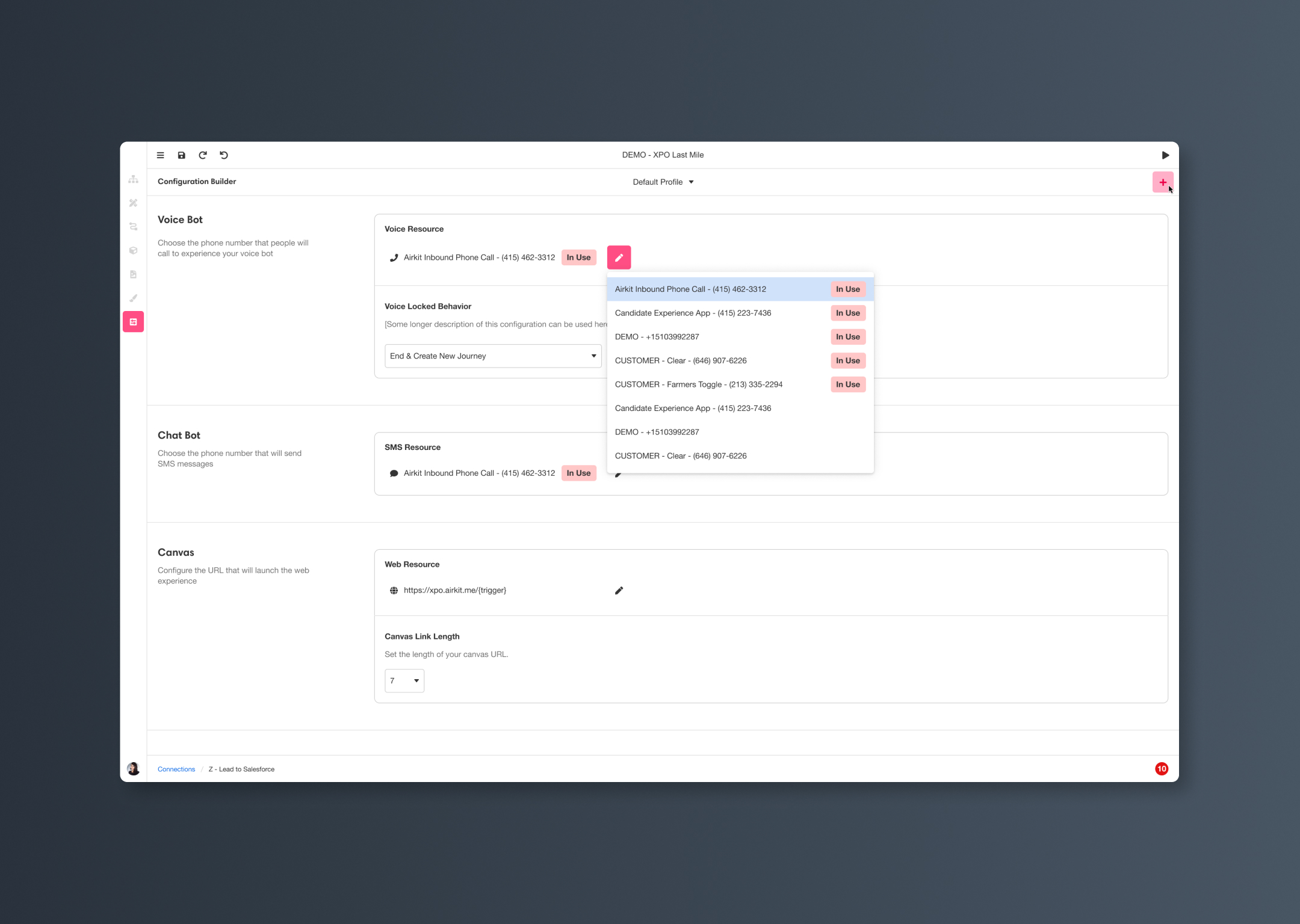
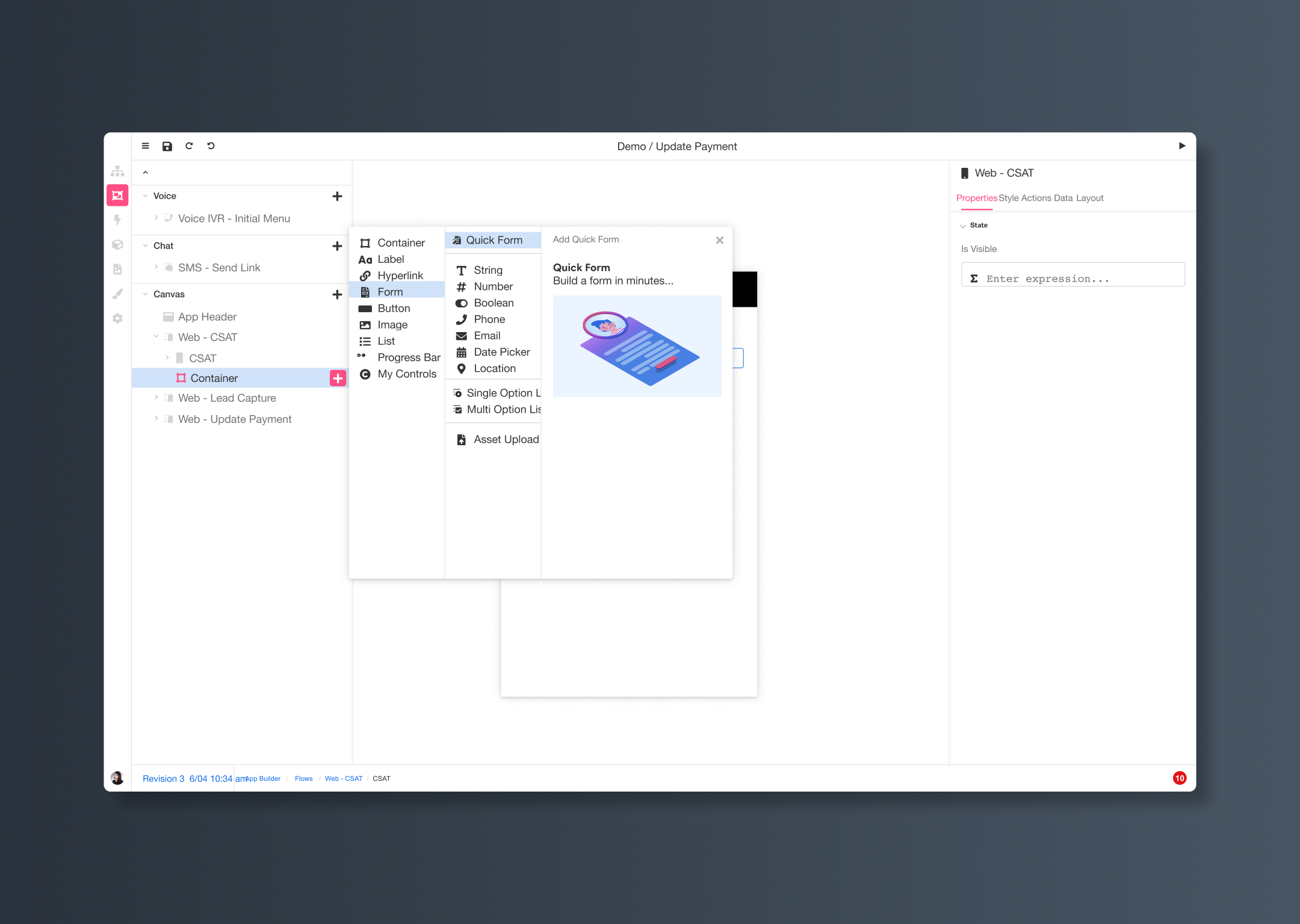
Airkit platform interface
Airkit builder: a visual canvas where enterprise teams configure customer journey flows without writing code.
S
Situation

Enterprise Power, Consumer Expectations

Enterprises were being asked to deliver digital experiences that felt as smooth as consumer apps โ€” but built on top of complex, compliance-heavy systems. Existing tools forced them to choose between power and usability. Airkit needed to offer both.

Two audiences, one builder
Non-developers needed a visual, drag-and-drop experience. Developers needed node-based flows, variable management, and code integration. The platform had to serve both without making either feel like a second-class citizen.
Compliance without friction
Enterprise clients operated under strict regulatory requirements โ€” HIPAA, PCI, SOC 2. Every design decision that touched data, authentication, or form inputs carried compliance implications that had to be invisible to the end user.
Paper-based workflows going digital
Many enterprise clients were digitizing workflows that had lived on paper for decades โ€” FNOL claims, agent-assisted flows, fraud review processes. The UX had to honor existing mental models while eliminating the inefficiency.
Scale across diverse clients
The platform served clients across insurance, banking, telecom, and retail โ€” each with entirely different workflows and brand requirements. The design system had to flex to all of them without collapsing into chaos.
The core tension
"The platform couldn't be just another drag-and-drop toy. It needed to feel powerful enough that developers trusted it, and simple enough that a product manager could ship a claims flow without filing an IT ticket."
T
Task

Shape the Platform Experience End to End

My work spanned UX research, flow architecture, builder UI design, and the modular design system that tied it all together across every enterprise use case and client context.

What I was responsible for
  • User research: interviews with enterprise builders and end users
  • Analysis of paper-based workflow transitions
  • Builder UX: canvas, node flows, variable management
  • Customer-facing journey design: FNOL, claims, onboarding
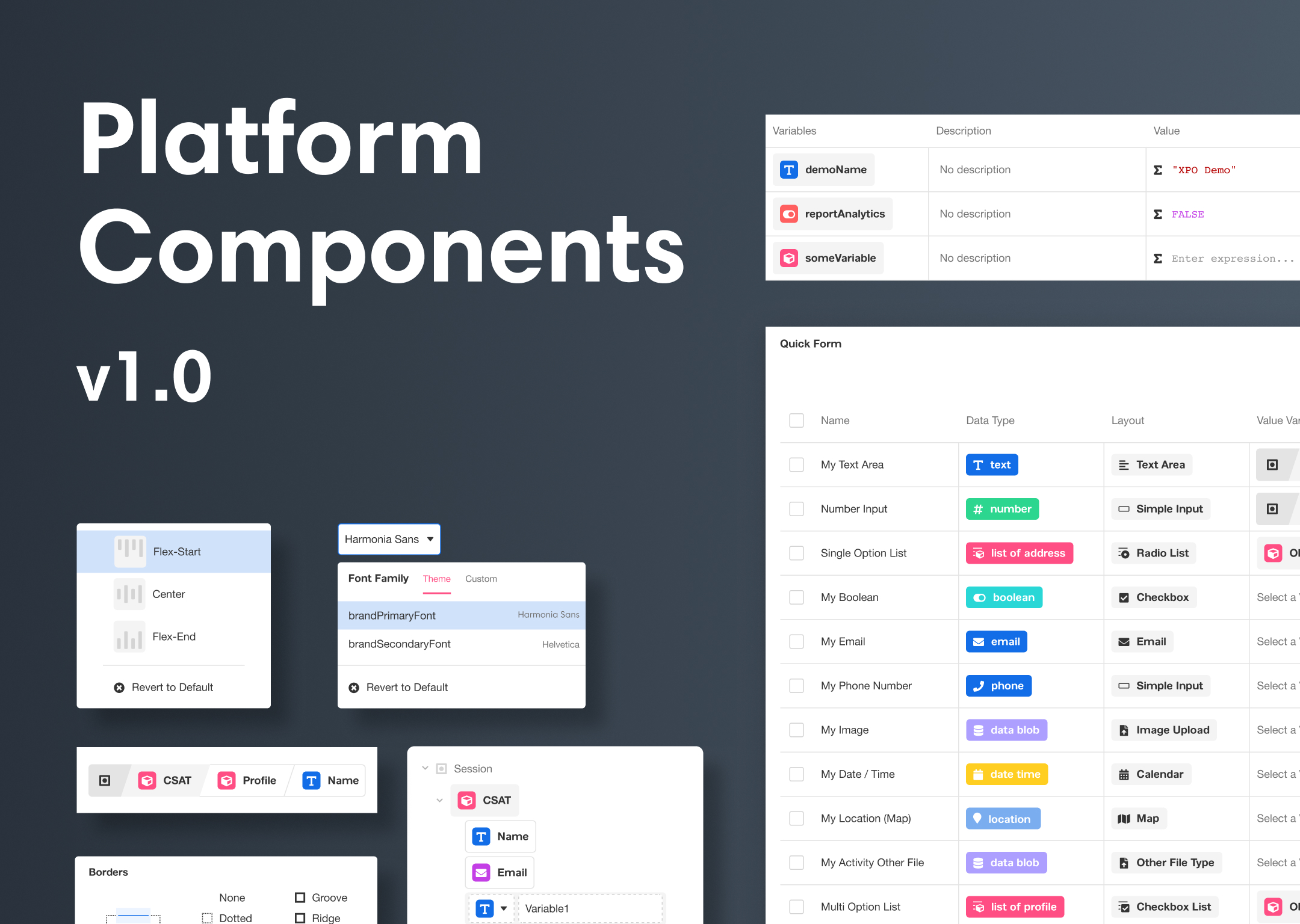
  • Modular design system with pre-built templates
  • Compliance-aware component patterns
The bar we set
  • A product manager can build and deploy a customer flow in under a day
  • A developer can drop into code-level control at any point without leaving the platform
  • Every component handles edge cases that matter in regulated industries
  • Clients can white-label the output without custom engineering work
A
Action

Research Grounded Every Design Decision

We started with users before touching any pixels. Research shaped the architecture. Architecture shaped the builder. The builder shaped the design system.
01
User Research and Competitive Analysis
We interviewed enterprise builders โ€” the product managers, operations leads, and developers who would actually use the platform โ€” alongside the end customers who would complete the journeys they built. We also reviewed competing low-code tools, existing paper workflows that clients wanted to digitize, and the specific pain points that had caused earlier tooling to fail at scale.
Enterprise builders: speed, control, no dead ends
End customers: clarity, trust, progress visibility
Developers: code escape hatches, variable access
Compliance teams: audit trails, data handling rules
02
Flow Architecture and Journey Mapping
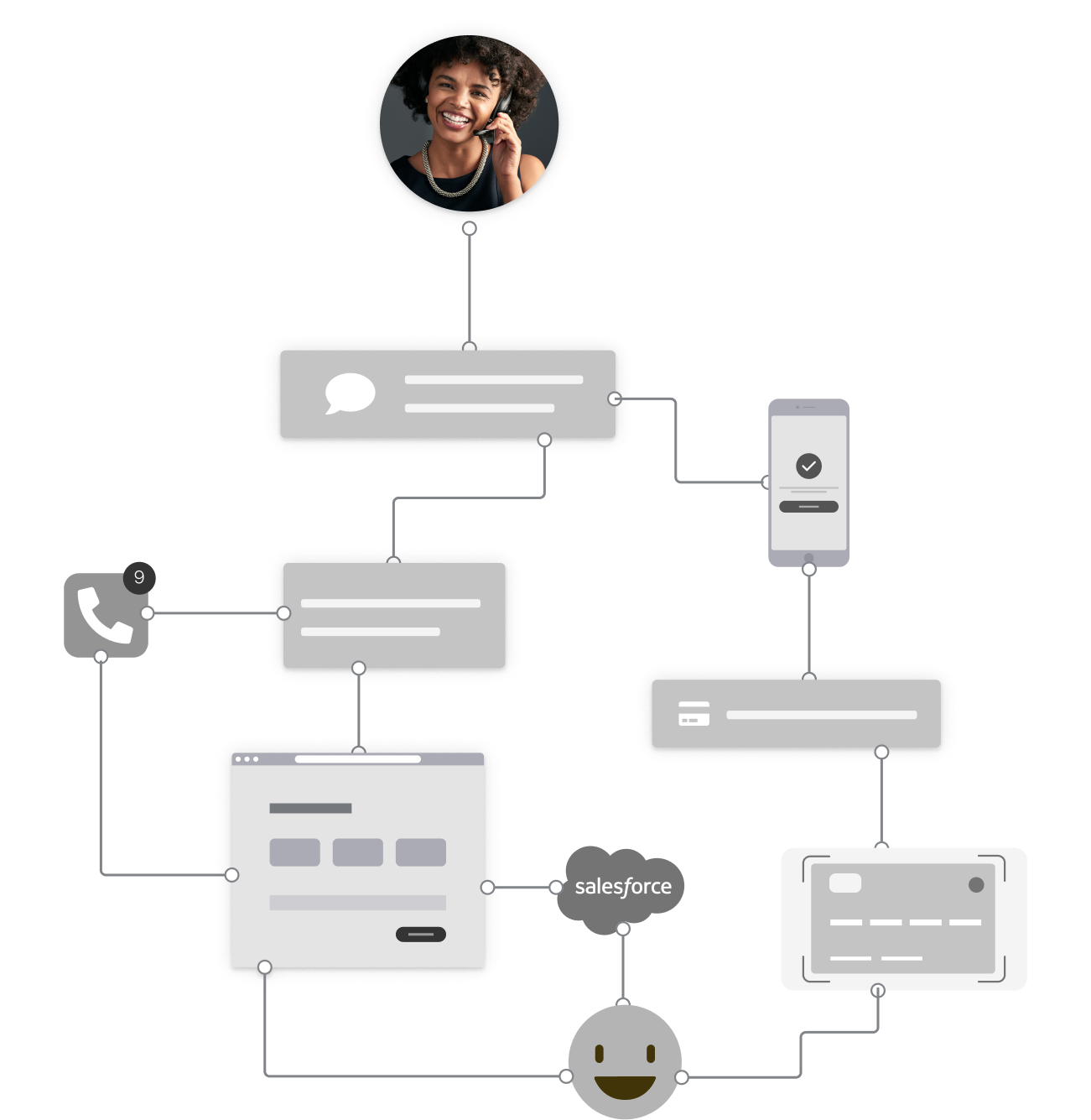
We mapped the builder experience and the customer-facing journey side by side โ€” understanding how decisions in the builder directly affected the end-user experience. Node-based flows, branching logic, variable management, and conditional rendering were all architected with both audiences in mind.
Macro flow architecture
Macro flow architecture: the full builder-to-customer journey mapped before a single component was designed.
03
Builder UI and Customer Journey Design
We designed the full Airkit builder โ€” the canvas, the component palette, the properties panel, the preview mode โ€” and the customer-facing templates for FNOL, claims tracking, fraud review, and onboarding. Each template was built to work out-of-the-box while remaining fully customizable for client branding and workflow specifics.
04
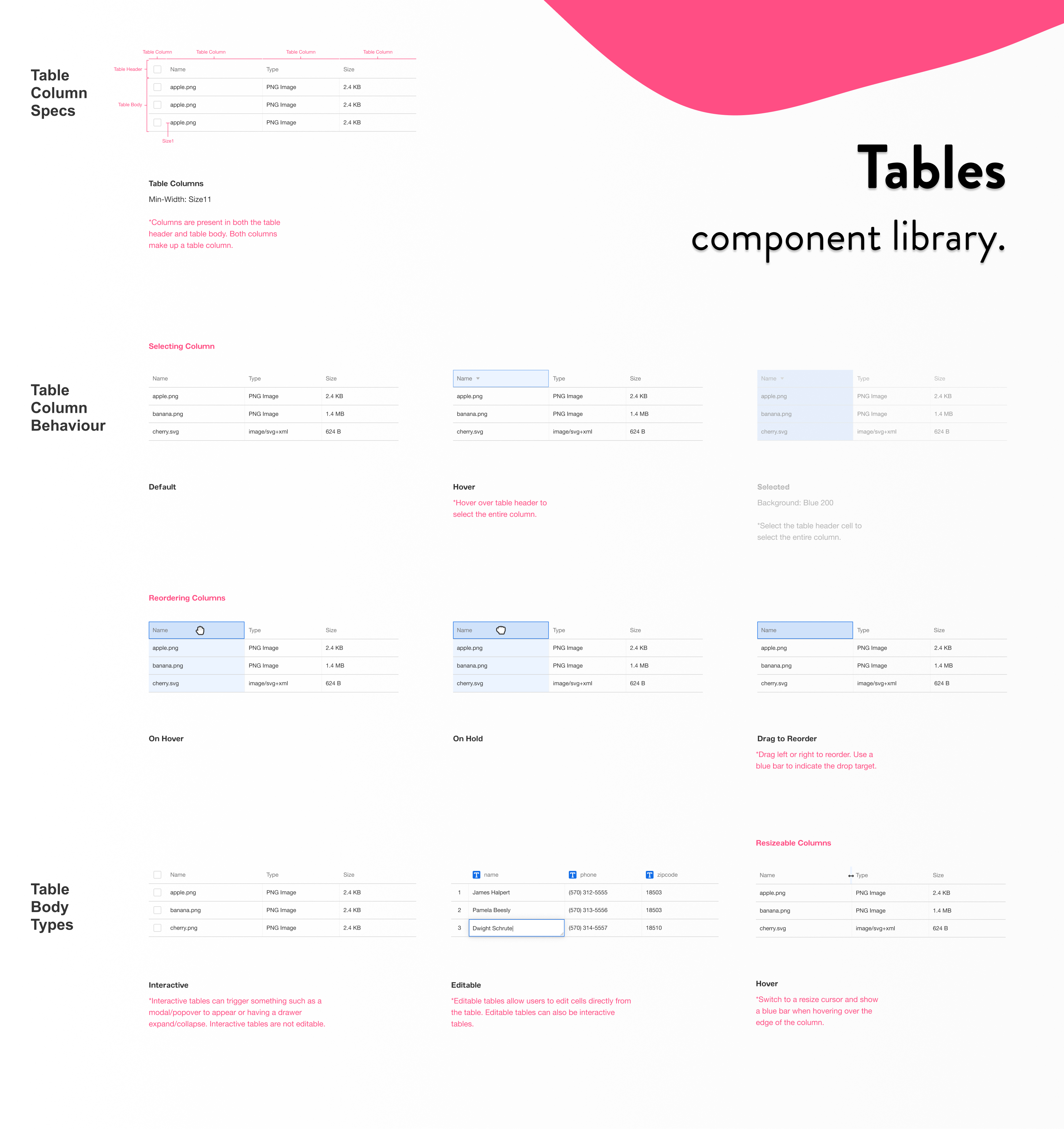
Modular Design System
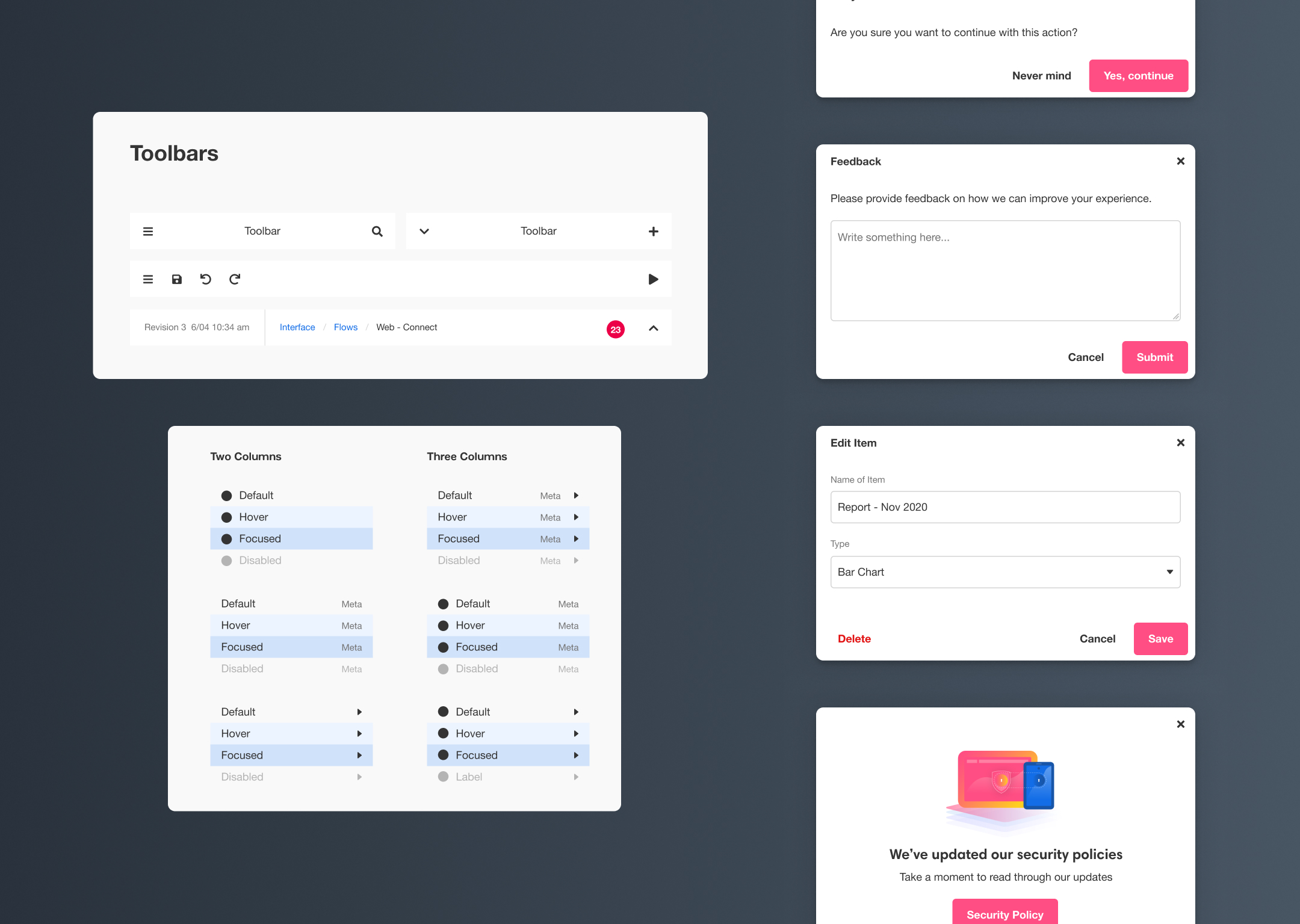
We built a modular design system that powered both the builder UI and the customer-facing output. Pre-built templates covered the most common enterprise use cases. Every component was designed with accessibility, compliance, and white-label customization in mind โ€” so clients could brand their output without touching engineering resources.

Enterprise Complexity, Made Buildable

Clients could ship customer-facing digital journeys in days instead of months. The design system reduced the surface area for inconsistency and gave engineering a clear implementation path across every enterprise context.

0
% reduction in lead time
0
Pre-built templates
0
Industries served
0
Enterprise clients
Non-developers unblocked
Product managers and operations leads could build and deploy full customer journeys without engineering involvement, cutting delivery cycles from months to days.
Developer trust maintained
Code escape hatches, variable management, and advanced flow controls kept the platform credible for engineering teams who needed more than drag-and-drop.
Compliance by design
Every component was built with regulatory requirements baked in โ€” so clients could ship secure, compliant flows without treating compliance as an afterthought.
White-label at scale
The design system's token architecture let clients apply their brand across every customer-facing journey without custom engineering work on each deployment.
"Alejandro brought a rare combination of systems thinking and UX craft. He understood the complexity of what we were building and made it feel effortless for the people using it."
AT
Airkit Design Team
San Francisco, CA